
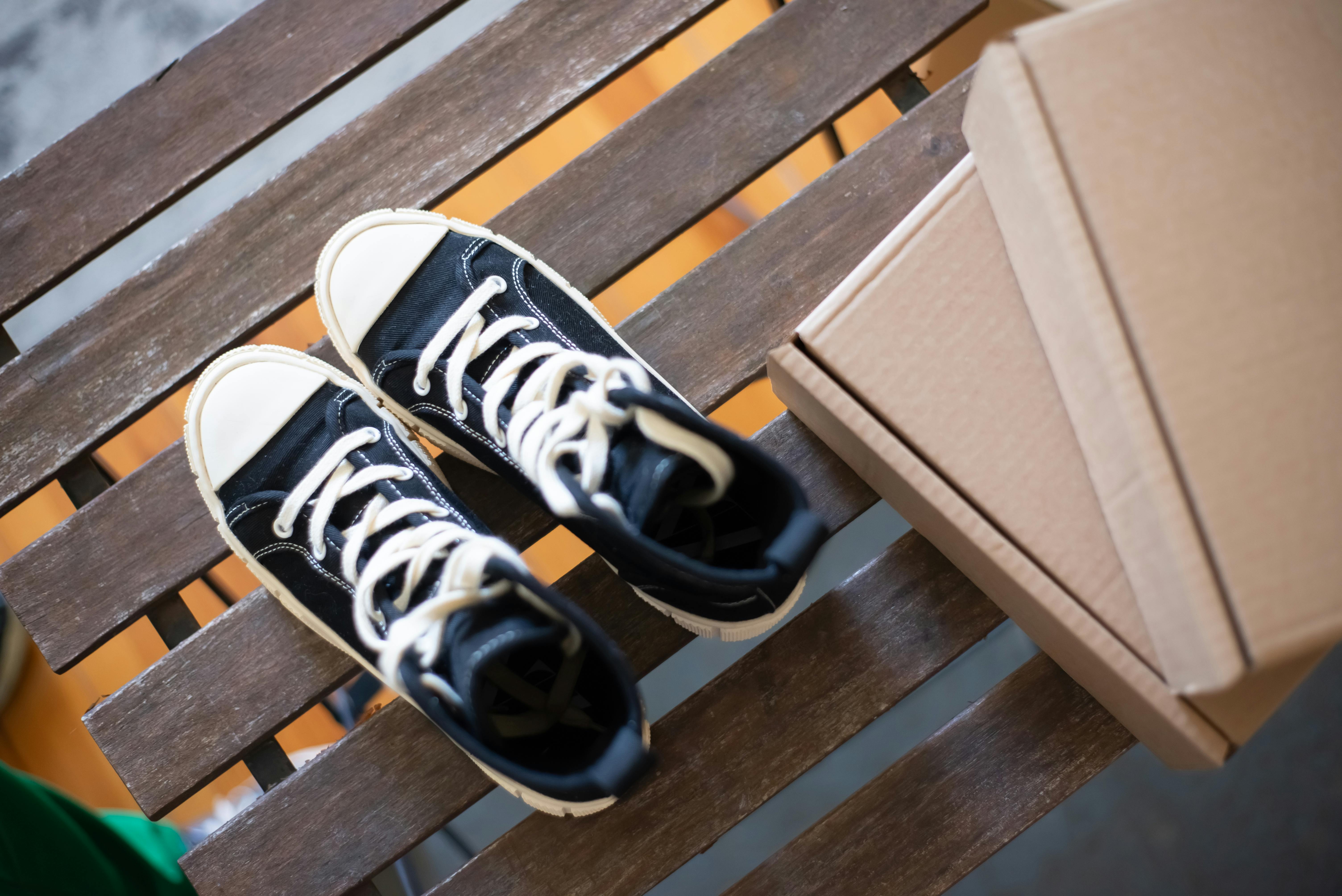
Children's shoes in the United States run from a small size one up to thirteen and then start over at one in a larger scale. The jump has a straightforward mechanical origin.
The scale is built on a fixed step
English-derived shoe sizing advances by a fixed increment of a third of an inch per full size, a step inherited from historical measurement practice.
Because the increment is constant rather than proportional, the scale can run indefinitely upward from any chosen starting point.
The starting point for children was set at the smallest practical shoe, which puts a size one at a length appropriate for an infant rather than at zero.
Thirteen is where the scale is reset
Continuing upward from a children's one would eventually reach the adult range, but the numbers would be unfamiliar and inconveniently large.
The convention instead restarts the count once children's sizes reach thirteen, which corresponds roughly to the point where a foot enters adult proportions.
An adult one therefore follows directly from a children's thirteen with the usual third-of-an-inch step, and no length is skipped despite the numerical discontinuity.
The gap between systems causes real errors
Parents shopping across departments encounter the same number meaning two different lengths, which is the most common source of ordering mistakes.
Retailers mark the distinction with letters after the number, but the labels are inconsistent between brands and are frequently omitted from listings.
Checking the stated insole length in inches or centimeters removes the ambiguity entirely, and most manufacturers publish it somewhere in their sizing information.
Growth makes fitting a moving target
Children's feet lengthen in irregular bursts rather than at a steady rate, so a pair fitted correctly can become too short within a season.
The usual practice is to leave a small allowance beyond the longest toe, enough to accommodate growth without letting the foot slide during walking.
Excessive allowance causes its own problems, since a foot moving inside the shoe produces friction and prevents the shoe from flexing where the foot does.
Children's feet are not small adult feet
The bones of a young foot are substantially cartilage and ossify gradually, which makes the structure more pliable and more easily influenced by external pressure.
Flexible soles and adequate width are emphasized for that reason, and stiff supportive construction is generally reserved for specific clinical indications.
Concerns about gait, persistent complaints of pain or unusual wear patterns belong with a pediatrician or podiatrist rather than being addressed by a change of size.