
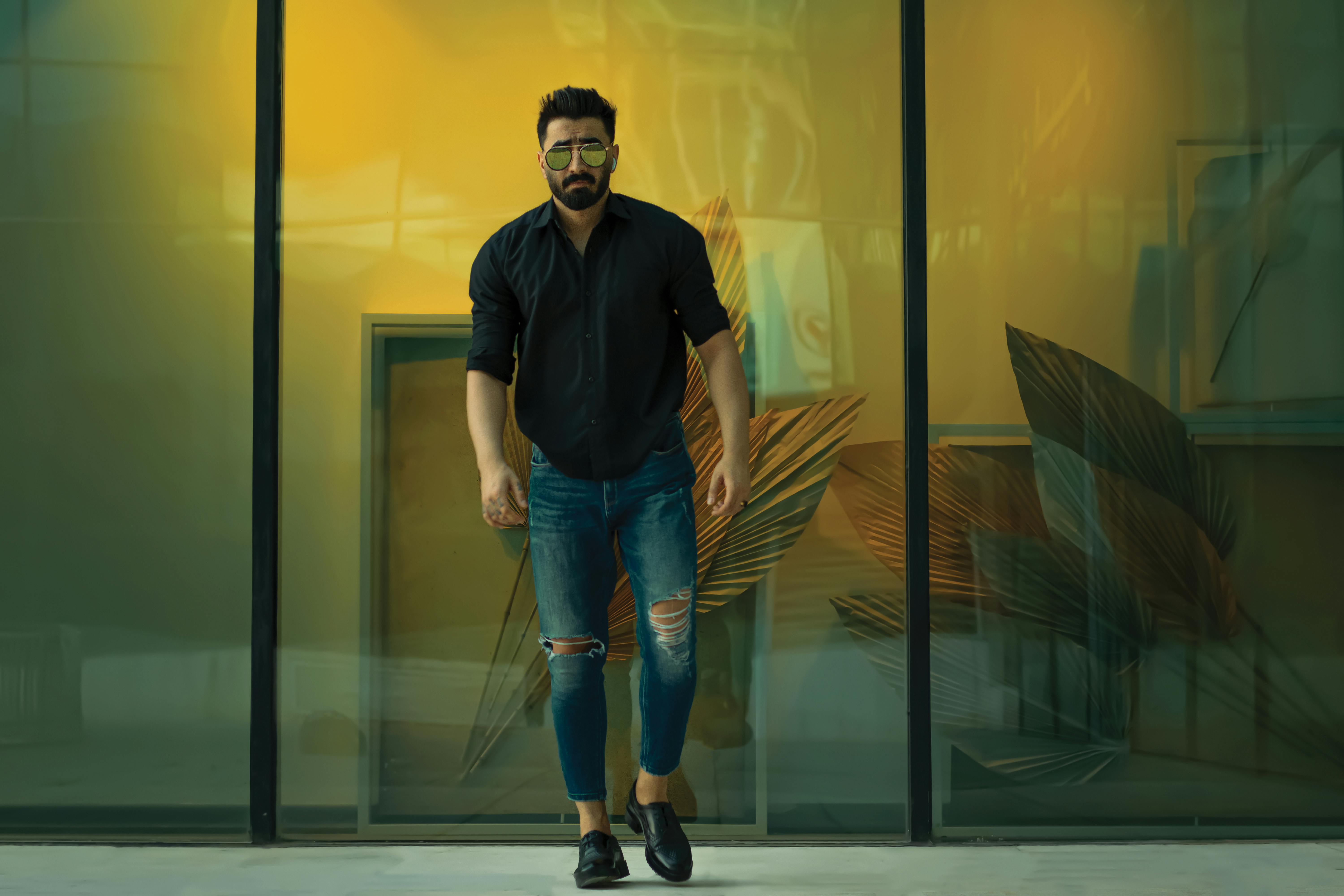
A shirt collar is the most structurally demanding part of the garment. It has to stand upright, sit against the neck, and frame a tie or lie flat on its own, all from two layers of thin cotton.
The stand does most of the work
A dress shirt collar is two pieces: a band that wraps the neck, called the stand, and the leaf that folds down over it.
The stand is cut on a curve so that it rises at the back and lowers at the front, following the shape of the neck rather than forming a cylinder.
If that curve is wrong the collar gaps at the front or rides up at the back, and no amount of stiffening in the leaf will correct it.
Interlining supplies the rigidity
Between the outer and inner layers of a collar sits an interlining, a separate fabric chosen for stiffness rather than appearance.
Its weight determines the character of the collar, from a soft roll that folds gently to a rigid edge that holds a sharp line.
The same shirt fabric with two different interlinings produces collars that look and behave entirely differently, which is a large part of what separates shirt makers.
Fusing and sewing age differently
Most shirts today use a fused interlining, bonded to the outer fabric with adhesive under heat and pressure. It is fast, consistent and inexpensive.
Sewn or floating interlinings are attached by stitching only, so the layers move independently and the collar softens gradually rather than staying rigid.
Fusing fails visibly when it fails. Repeated washing can separate the adhesive in patches, producing the bubbling seen on older shirts, which cannot be repaired.
Collar stays are a removable solution
Stays are thin strips inserted into channels along the underside of the collar points, holding them straight and preventing curling.
Removable metal or plastic stays keep the collar crisp while allowing the shirt itself to remain relatively soft, which suits lighter interlinings.
Permanently sewn-in stays are simpler but cannot be removed before pressing, and they leave an outline on the fabric over time.
Collar shape is proportion rather than fashion alone
Spread, point and cutaway collars differ in the angle between the points and in how much of the neck they expose.
Wider spreads create horizontal emphasis and suit narrower faces, while longer points create length, which is why the preferred shape moves with tie width and lapel proportions.
The construction underneath is unchanged in each case. What varies is the pattern, and the interlining is chosen to suit the shape it has to hold.