
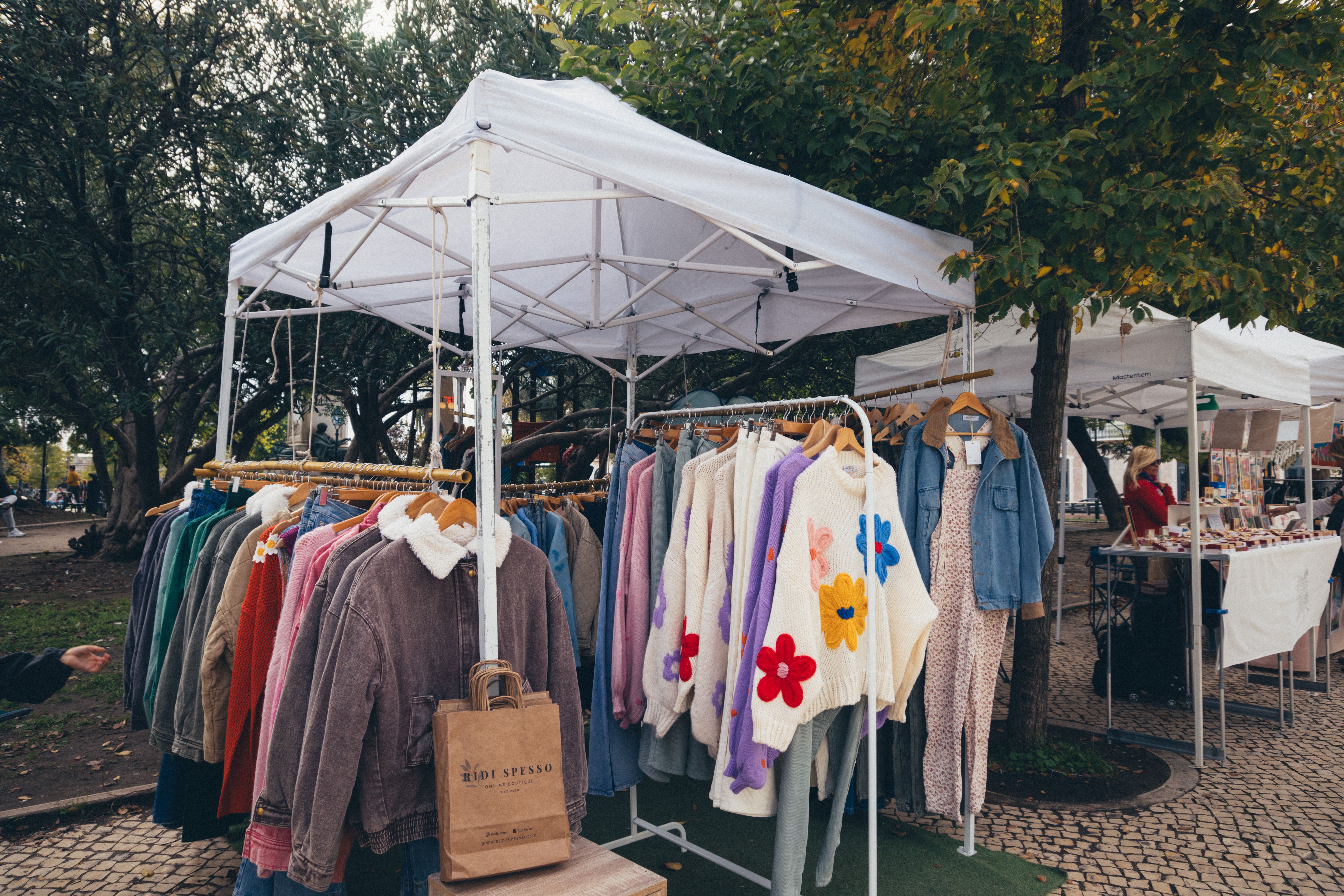
Discover the transformative power of circular fashion and advanced textile-to-textile recycling in 2026. Learn how eco-conscious shopping, ethical brands, and innovative recycling services are revolutionizing sustainable clothing. Compare the best options to reduce fashion waste, make smart investments, and embrace the future of green fashion tech.
Introduction to the Topic
Welcome to 2026, where the fashion landscape is undergoing its most radical transformation yet! The days of "wear once, toss forever" are rapidly becoming a relic of a bygone era. For years, the fashion industry has grappled with an unsustainable linear model: take, make, dispose. This approach has led to devastating environmental consequences, from overflowing landfills choked with textile waste to the massive carbon footprint of virgin material production. But a new paradigm is here, championed by innovators, ethical brands, and increasingly, by you, the conscious consumer: Circular Fashion. At its heart lies a simple yet revolutionary concept: keeping garments and their components in use for as long as possible, then regenerating them into new products. And the undisputed hero of this movement? Advanced Textile-to-Textile Recycling.
This isn't just a trend; it's the inevitable evolution of style, responsibility, and smart economics. The global push for sustainability, coupled with groundbreaking technological advancements, has propelled textile recycling from niche concept to a mainstream imperative. As an editor at fablishious.com, we believe that understanding this shift is not just about staying fashionable, but about making informed choices that benefit both your personal style and the planet's future. This comprehensive guide will equip you with the knowledge to navigate the exciting world of circular fashion, compare the best options available today, and empower you to invest your style bucks wisely in a truly sustainable wardrobe.
Backgrounds & Facts
The scale of fashion's waste problem is staggering. Annually, over 100 billion garments are produced globally, and a shocking 87% of textile waste ends up in landfills or is incinerated. That's a truckload of textiles every second! This linear system not only depletes natural resources but also generates immense pollution, from water contamination due to dyeing processes to microplastic shedding from synthetic fibers. The urgency for a circular approach couldn't be clearer.
The traditional fashion model, often dubbed 'fast fashion,' thrives on rapid production cycles, low prices, and disposability. This has led to a culture where clothing is often worn only a handful of times before being discarded. While donation and upcycling have played a role, they often represent a downstream solution, not a systemic change. The true game-changer lies in textile-to-textile recycling, which aims to close the loop entirely, turning old garments directly into new fibers, ready for new clothing.
Historically, textile recycling faced significant hurdles. Blended fabrics (cotton-polyester, for instance) were notoriously difficult to separate, and dyes often contaminated the recycling process. Mechanical recycling, which shreds fabrics into new fibers, often resulted in shorter, weaker fibers, limiting their reuse. However, the last five years have seen an explosion of innovation. Chemical recycling technologies, such as those employing solvent-based dissolution or enzymatic processes, can now effectively separate blended fibers, remove dyes, and regenerate high-quality cellulose or polyester polymers. Companies like Infinited Fiber Company and Renewcell are leading the charge, turning cotton-rich waste into new, virgin-quality textile fibers. Similarly, advanced mechanical recycling is improving, producing stronger, longer fibers suitable for a wider range of applications. These breakthroughs are crucial because they mean we can now genuinely create new clothes from old, without compromising on quality or aesthetics.
Furthermore, consumer demand for transparent and ethical practices has surged. A recent 2025 study by the Global Fashion Institute revealed that over 70% of consumers are willing to pay a premium for sustainable fashion, and a significant portion actively seek out brands with robust recycling and take-back programs. Governments, too, are stepping up with Extended Producer Responsibility (EPR) schemes, holding brands accountable for the entire lifecycle of their products, further accelerating the shift towards circularity.
Expert Opinion / Analysis
“The transition to circular fashion isn’t just an environmental imperative; it’s an economic goldmine,” states Dr. Anya Sharma, Head of Sustainable Textiles at the Global Fashion Institute. “We’re moving from a scarcity mindset, where resources are finite, to an abundance mindset, where waste is simply a resource in the wrong place. The brands that embrace textile-to-textile recycling are not just future-proofing their supply chains; they’re unlocking immense value, reducing reliance on volatile raw material markets, and building unparalleled consumer loyalty.”
Dr. Sharma highlights that the investment landscape is rapidly shifting, with venture capital pouring into innovative textile recycling startups. “What we’re seeing in 2026 is the maturation of these technologies. They’re no longer lab experiments; they’re scaling, becoming economically viable, and critically, producing fibers that meet or exceed the quality of virgin materials. This means designers have more freedom, and consumers don’t have to compromise on style or durability for sustainability.”
The analysis also points to the growing collaboration across the value chain. Retailers are partnering with recycling innovators, designers are integrating recycled content from the outset, and logistics companies are developing efficient collection and sorting systems. This ecosystem approach is vital. “No single entity can solve this alone,” Dr. Sharma emphasizes. “It requires a collective effort, from policymakers setting ambitious targets to consumers making conscious purchasing and disposal decisions. The biggest challenge now isn't the technology itself, but scaling the infrastructure and ensuring consistent, high-quality feedstock for recycling facilities. That’s where consumer participation in take-back programs becomes absolutely critical.”
💰 Best Options in Comparison (VERY IMPORTANT)
Navigating the circular fashion landscape can feel overwhelming, but 2026 offers a wealth of fantastic options for both purchasing and participating. Here's a look at some of the leading players and how you can engage:
-
1. ReWear Collective: The Closed-Loop Brand Champion
ReWear Collective has cemented its position as a leader in truly circular apparel. They design garments specifically for disassembly and recycling, using mono-material fabrics (e.g., 100% organic cotton or 100% recycled polyester) whenever possible. Their commitment extends to a robust take-back program: return any ReWear Collective item at the end of its life, and they guarantee it will be processed through advanced textile-to-textile recycling partners (often chemical recycling for their cotton lines, mechanical for synthetics). This ensures your old jeans become new jeans, not landfill fodder. Their collections are stylish, durable, and come with a detailed impact report for each product, showcasing its recycled content and carbon footprint reduction.
-
2. Loopify: Your Personal Textile Recycling Hub
Loopify is a revolutionary consumer-facing platform that simplifies textile recycling for everyone. Think of it as a central nervous system for your discarded clothes. Through their intuitive app, you can locate nearby drop-off points (often in partnership with major retailers or local councils), schedule home pickups, or even generate pre-paid shipping labels to mail in your unwanted textiles. Loopify then sorts and directs materials to the most appropriate recycling stream – high-quality items to resale/upcycling, mono-materials to advanced textile-to-textile recyclers, and blended fabrics to innovative material science projects. They even offer incentives, like discounts on partner sustainable brands, for every kilogram you recycle. It’s the easiest way to ensure your old clothes get a second life.
-
3. FiberFlow Tech: The Innovation Powerhouse (Behind Your Favorite Brands)
While not a direct-to-consumer brand, FiberFlow Tech is a pivotal player in the circular economy, representing the cutting-edge of textile recycling innovation. They license their proprietary chemical recycling technology to major fashion brands and manufacturers worldwide. Their process excels at depolymerizing complex polyester blends and regenerating high-purity PET suitable for new textile fibers, effectively closing the loop on synthetic clothing. When you see a brand proudly stating their products contain 'FiberFlow Certified Recycled Polyester,' you know you're investing in true textile-to-textile circularity, avoiding virgin plastic production entirely. Look for their certification on hangtags and product descriptions – it's a mark of genuine innovation and environmental commitment.
Here's a detailed comparison to help you make informed choices:
| Feature | ReWear Collective | Loopify | FiberFlow Tech (Behind Brands) |
|---|---|---|---|
| Type of Service/Product | Sustainable Apparel Brand with Take-Back | Consumer Textile Recycling Platform | B2B Textile Recycling Technology Licensor |
| Core Focus | Designing & Selling Closed-Loop Garments | Facilitating Easy Textile Collection & Sorting | Advanced Chemical Recycling of Polyester |
| Technology Utilized | Partnerships with leading chemical/mechanical recyclers | Logistics & AI-powered sorting systems | Proprietary Polyester Depolymerization |
| Materials Handled | Mono-material cotton, polyester, tencel | All textile types (sorted for best use) | Polyester & Polyester-blend textiles |
| Consumer Action | Buy products, return old items for recycling | Drop-off/mail-in any unwanted textiles | Look for 'FiberFlow Certified' products |
| Cost/Benefit | Premium pricing for quality & circularity; discounts on next purchase for returns | Service fees (some free options); partner discounts for recycling | Enables brands to offer recycled content without premium mark-up |
| Impact/Certifications | Cradle-to-Cradle Certified, GOTS, transparent impact reports | Partners with certified recyclers; tracks impact of collected textiles | Proprietary 'FiberFlow Certified Recycled Polyester' label |
| Why Choose It? | For a fully circular wardrobe from a trusted brand. | For convenient, reliable recycling of all your textiles. | To support brands using cutting-edge, high-quality recycled materials. |
Outlook & Trends
The future of circular fashion in 2026 and beyond is electrifying. We anticipate several key trends that will further accelerate its adoption and impact:
-
Hyper-Transparency via Blockchain & AI: Expect to see more brands leveraging blockchain technology to track recycled materials from fiber to finished garment. AI will play a crucial role in optimizing sorting processes, predicting material availability, and even designing garments for optimal recyclability. Imagine scanning a QR code on your new dress and seeing the exact journey of its recycled fibers!
-
Regenerative Agriculture & Bio-Based Materials: While recycling old fibers is key, the origin of virgin fibers is also evolving. Regenerative agriculture practices, which focus on restoring soil health and biodiversity, will become standard for natural fibers like cotton and wool. Simultaneously, innovative bio-based materials (e.g., mushroom leather, algae-derived fabrics) will integrate seamlessly into circular systems, designed for composting or chemical recycling at end-of-life.
-
Investment & Infrastructure Boom: Governments and private investors will continue to pour capital into building large-scale textile recycling infrastructure. Expect to see more regional recycling hubs, making it easier and more cost-effective to process waste locally. This will also create numerous green jobs across the value chain.
-
Personalized Circular Services: Beyond general take-back programs, bespoke services will emerge. Think personalized repair workshops offered by brands, subscription models for clothing rental that integrate seamless recycling, and even 'wardrobe audits' that help consumers maximize the lifespan of their existing clothes before considering new purchases or recycling.
-
Policy & Regulation Expansion: Extended Producer Responsibility (EPR) laws will become more widespread and stringent, pushing brands to take full financial and operational responsibility for their products' end-of-life. This will incentivize design for circularity and investment in recycling technologies.
Conclusion
The dawn of circular fashion, powered by advanced textile-to-textile recycling, marks a pivotal moment in our relationship with clothing. It’s a testament to human ingenuity and our collective commitment to a more sustainable future. No longer is sustainable fashion a compromise; it’s an enhancement – offering innovative materials, transparent supply chains, and a clear conscience.
As a fablishious.com reader, you are at the forefront of this revolution. By choosing brands like ReWear Collective, utilizing platforms like Loopify, and supporting products that leverage breakthrough technologies like FiberFlow Tech, you are actively participating in closing the loop. You’re not just buying clothes; you’re investing in a system that values resources, minimizes waste, and designs for eternity, not obsolescence. Your purchasing power is immense. Use it wisely, embrace the circular economy, and elevate your style while safeguarding our planet. The future of fashion is here, and it's beautifully circular.